

March 16, 2022
On a dark and stormy night in April 1947, Trans-Canada Airlines Captain W.G. Pike radioed Vancouver Airport to say his aircraft was minutes away from landing. “TCA-3 to Vancouver tower,” said Captain Pike. “By the Range of 7,000 (feet) on instruments. Westbound at 11:13.”
Minutes later, as reported by the Vancouver Sun, the twin-engine Lockheed Lodestar and the 15 people on board vanished without a trace, marking the beginning of one of Canada’s longest aviation mysteries.
Speaking with North Shore News in 2014, Dennis Reid, the nephew of one of TCA-3’s passengers, said the big thing he remembered about that fateful event was the search for the missing plane. “All this technology today, we didn't have then," he said. There were no black boxes, no emergency locator transmitters, in those days. The search area, over mountains and ocean, was huge and largely inaccessible.
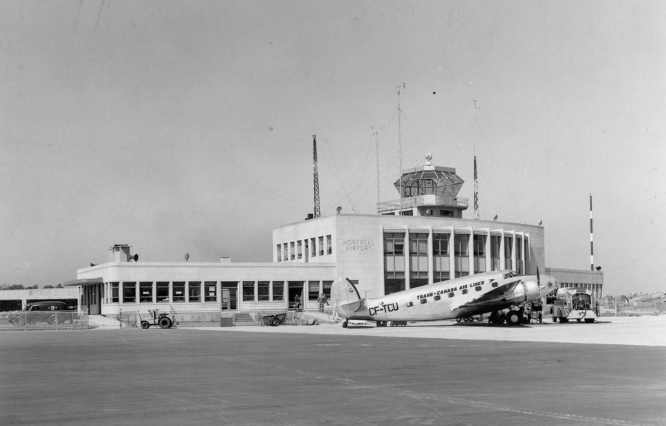
Example of a Trans-Canada Air Lines Lockheed Lodestar aircraft in the 1940s. (Credit: Canada. Canada Post / Library and Archives Canada / PA-061657)
According to the Vancouver Sun, the question of what happened to the plane dominated the front pages of newspapers for days as search crews tried to locate the missing aircraft.
The plane wasn’t found until 1992 when a hiker discovered its remains by happenstance on Mount Elsay in the Seymour Demonstration Forest on the North Shore.
While there have been great advancements in radar and other aviation surveillance systems since TCA-3’s disappearance, the technology used by air traffic service (ATS) professionals is still unable to track the exact position of aircraft in certain parts of Canada at all times. Traditional air traffic surveillance systems are ground based and limited to line of sight aircraft detection. Additionally, mountains and other inhospitable terrain can make the installation and maintenance of ground-based surveillance technology a challenge.
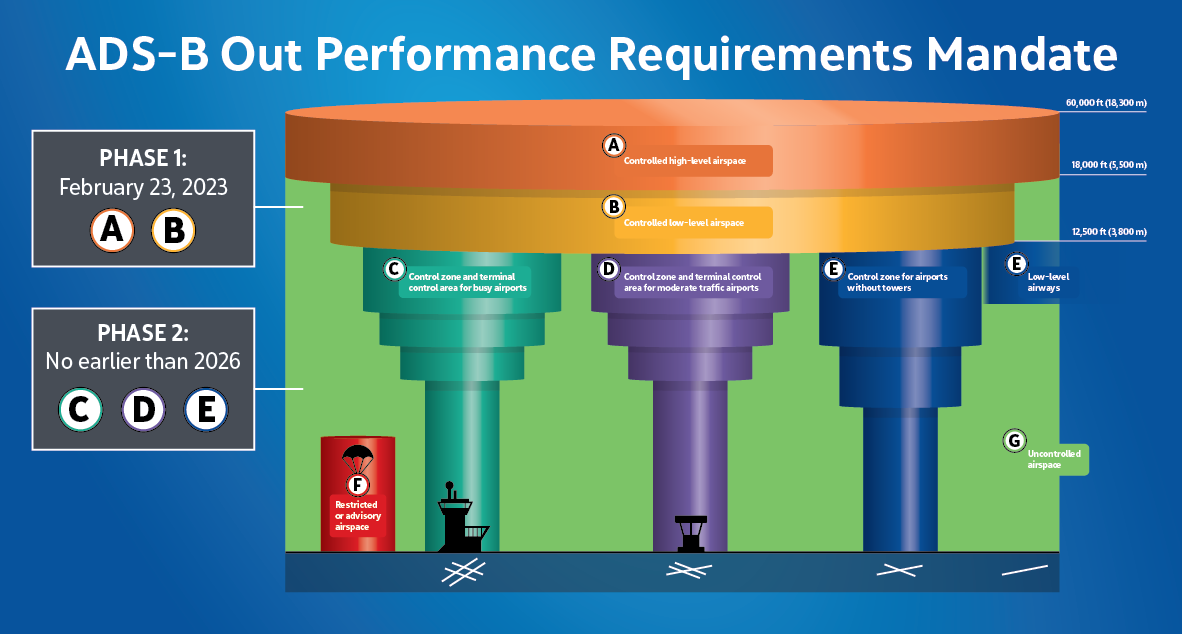
ADS-B uses Global Navigation Satellite System (GNSS) technology to calculate an airplane’s precise location, speed, and direction. This information is transmitted twice per second, providing greater situational awareness for air traffic controllers. It also provides NAV CANADA with the ability to accommodate airline and customer preferred routes. The mandate will come into effect in Class A and B Canadian airspace above 12,500 feet on February 23, 2023.
The mandate will be implemented below 12,500 feet, including Class C, D, and E airspace, starting no earlier than 2026. The approach and timing for implementation in these areas will be determined pending further assessment.
“If an adverse event happens in our airspace, ADS-B allows us to provide emergency service professionals with very precise and accurate information,” says Dwyer. “This technology is a real game-changer, making our skies safer, while also providing pilots with greater flexibility and the potential to reduce their aircraft’s greenhouse gas emissions.”
Following the introduction of space-based ADS-B in 2019 in the North Atlantic, one of the busiest air traffic corridors in the world, NAV CANADA reached a new safety milestone. Analysis of Gander oceanic control area (OCA) safety data from NAV CANADA in 2020 showed that with the use of space-based ADS-B, in addition to other air traffic management infrastructure, no aircraft spent time at an unprotected flight level or on an unprotected track.
“This introduction of space-based ADS-B represents one of the biggest advances in air traffic surveillance technology in Canadian airspace since the Second World War,” says Dwyer. “With the use of this system, air traffic service professionals have the ability to see aircraft in airspace where it was never before possible.”
Suitably equipped aircraft are also using space-based ADS-B over Hudson Bay and in domestic airspace above 29,000 feet in Canada. In December 2021, NAV CANADA began providing service to appropriately equipped aircraft below 29,000 feet in the Montreal Flight Information Region and plans to expand to the Edmonton and Winnipeg Flight Information Regions later this year, prior to the mandate going into effect in 2023.

To take advantage of space-based ADS-B and demonstrate compliance with the mandate, aircraft will need an appropriate transponder with ADS-B Out capabilities and performance. The applicable standard is RTCA DO-260B or newer.
The aircraft system will require an antenna able to broadcast out toward space-based ADS-B receivers emitting 1090 MHz Extended Squitter. This requirement can be met either through antenna diversity (the use of a top and bottom antenna) or with a single antenna that can transmit both towards the ground and up towards satellites.
Additional information about this mandate is available on NAV CANADA’s website.