

April 15, 2026
Drones are no longer just tools for photography or recreation.
Across Canada, they are inspecting bridges, monitoring forests, delivering supplies, and supporting emergency crews. A new study commissioned by NAV CANADA shows how this technology is taking off in a much bigger way.
According to the research, drones and other advanced air vehicles could add up to 120 billion dollars a year to Canada’s economy by 2045 and create more than 260,000 new jobs. This growth signals a major shift in how we use the sky, as remotely piloted aircraft systems (RPAS) and advanced air mobility (AAM) become key drivers of innovation, safety, and efficiency across many industries.
In 2024, RPAS and AAM operations generated between 2.4 billion and 3.6 billion dollars, supporting more than 30,000 jobs. Over the next two decades, that figure is expected to grow more than twentyfold, marking what NAV CANADA’s Vice President and Chief Technology & Information Officer, David Sheppard, describes as a new era of aviation in Canada:
“As we look ahead, the integration of RPAS and AAM into Canada’s airspace represents one of the most transformative opportunities in modern aviation. It’s a shift that will require new technologies, new regulatory frameworks, and deep collaboration across the industry, but the payoff is a safer, more connected, and more innovative aviation system for all Canadians.”
As the skies grow busier, the challenge is to ensure safe integration of these new airspace users through smart regulations, digital infrastructure, and public-private partnerships. NAV CANADA is leading this transformation by developing new traffic-management frameworks that will allow millions of autonomous and semi-autonomous aircraft to operate safely alongside traditional aircraft.

1. Expanding commercial applications
Today’s drones are far beyond simple photography tools. They are used for infrastructure inspection, logistics, agriculture, and emergency response, and 97% of future operations are expected to deliver measurable business value.
By 2045, RPAS and AAM are forecast to perform more than 21 million annual flights, up from just 300,000 in 2024. Much of this expansion will come from transportation, construction, and energy, where automation and aerial data are transforming the way work gets done.
2. Cost, efficiency, and safety advantages
RPAS technologies significantly reduce costs, especially for tasks that traditionally required manual inspection or hazardous fieldwork.
3. Sector-specific impacts
Each industry benefits differently. Some examples include:
Beyond traditional drone operations, AAMOpen a new window represents the next phase in Canada’s evolving aviation landscape. AAM refers to the development and integration of electric, autonomous, and low-emission aircraft, often known as electric Vertical Takeoff and Landing (eVTOL ) vehiclesOpen a new window, capable of transporting passengers and goods over short to medium distances. These aircraft have the potential to enhance connectivity between urban, suburban, and remote areas, reduce congestion, and significantly lower carbon emissions. Potential applications include urban air taxis, regional cargo services, emergency medical transport, and rapid-response missions in hard-to-reach locations.
To enable this ecosystem, new digital and physical infrastructure will be essential, including vertiports, dedicated air corridors, and integrated traffic management systems capable of safely coordinating thousands of AAM and RPAS flights in shared airspace. Global trials are currently underway.
Across Canada, early AAM projects and demonstration flights are already exploring these capabilities, supported by collaborations between industry, government, and NAV CANADA.
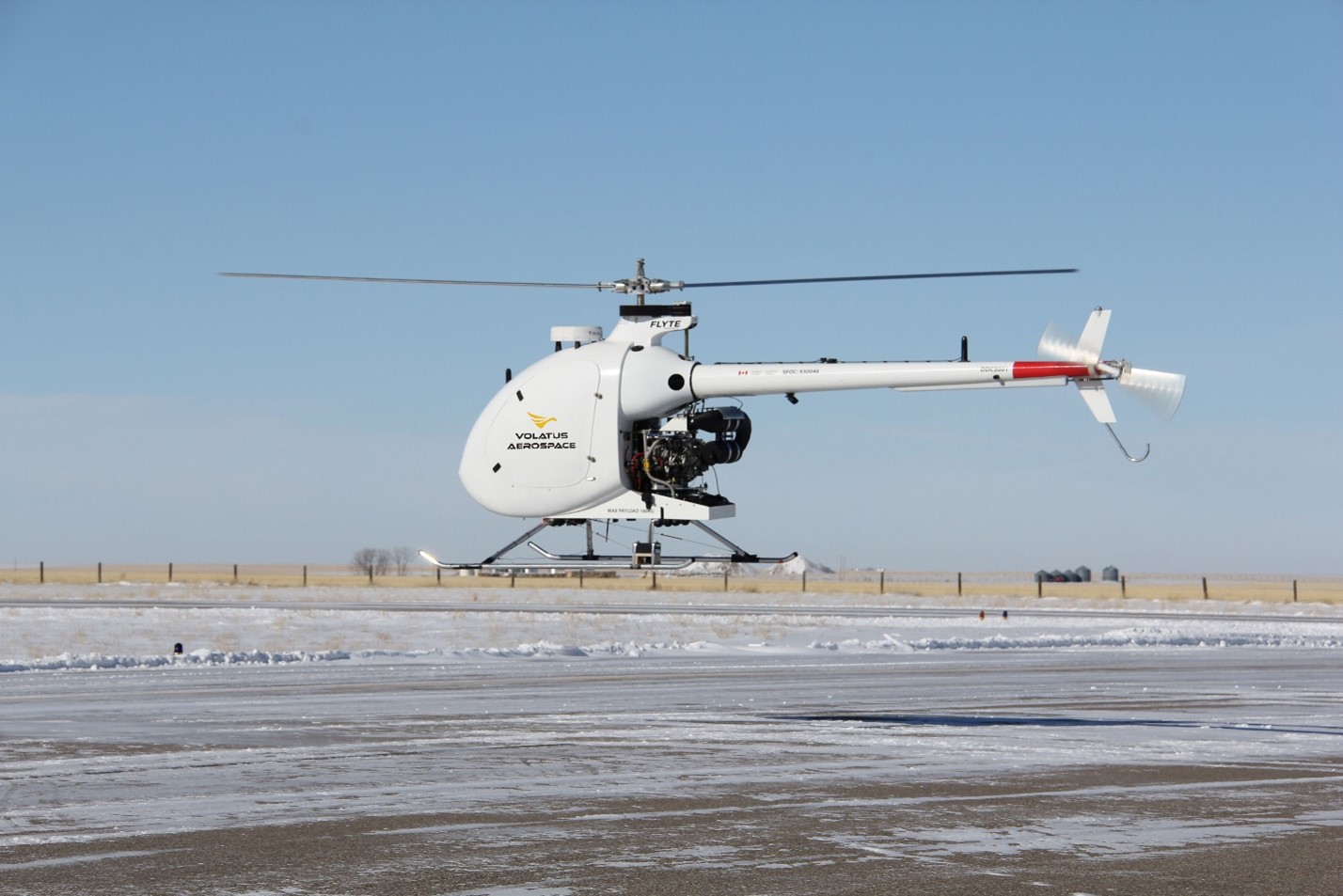
Photo credit: Volatus Aerospace
To better understand where Canada stands, this study benchmarked against four other leading countries that are anticipating growing RPAS and AAM industries: the United States, United Kingdom, Australia, and Belgium. Each has unique regulatory, geographic, and economic conditions that shape RPAS development.
Canada’s vast geography and established aviation safety culture give it a unique advantage: the ability to test large-scale operations safely and collaboratively.
Integrating millions of uncrewed flights into Canada’s airspace will require resilient digital systems, adaptive regulation, and continuous collaboration between industry, government, and communities.
As Alan Chapman, Director of RPAS Traffic Management at NAV CANADA explains, the scale of upcoming RPAS and AAM activity will require more robust digital infrastructure and closer data exchange between operators and regulators. He notes:
“To safely accommodate the surge in drone and advanced air mobility traffic, Canada will need highly connected digital systems and seamless information-sharing across the entire aviation ecosystem. Building that foundation is essential to ensuring these new operations can scale safely and responsibly.”
This work is already underway through ongoing projects in RPAS Traffic Management, which will form the backbone of safe, scalable drone operations in Canada.
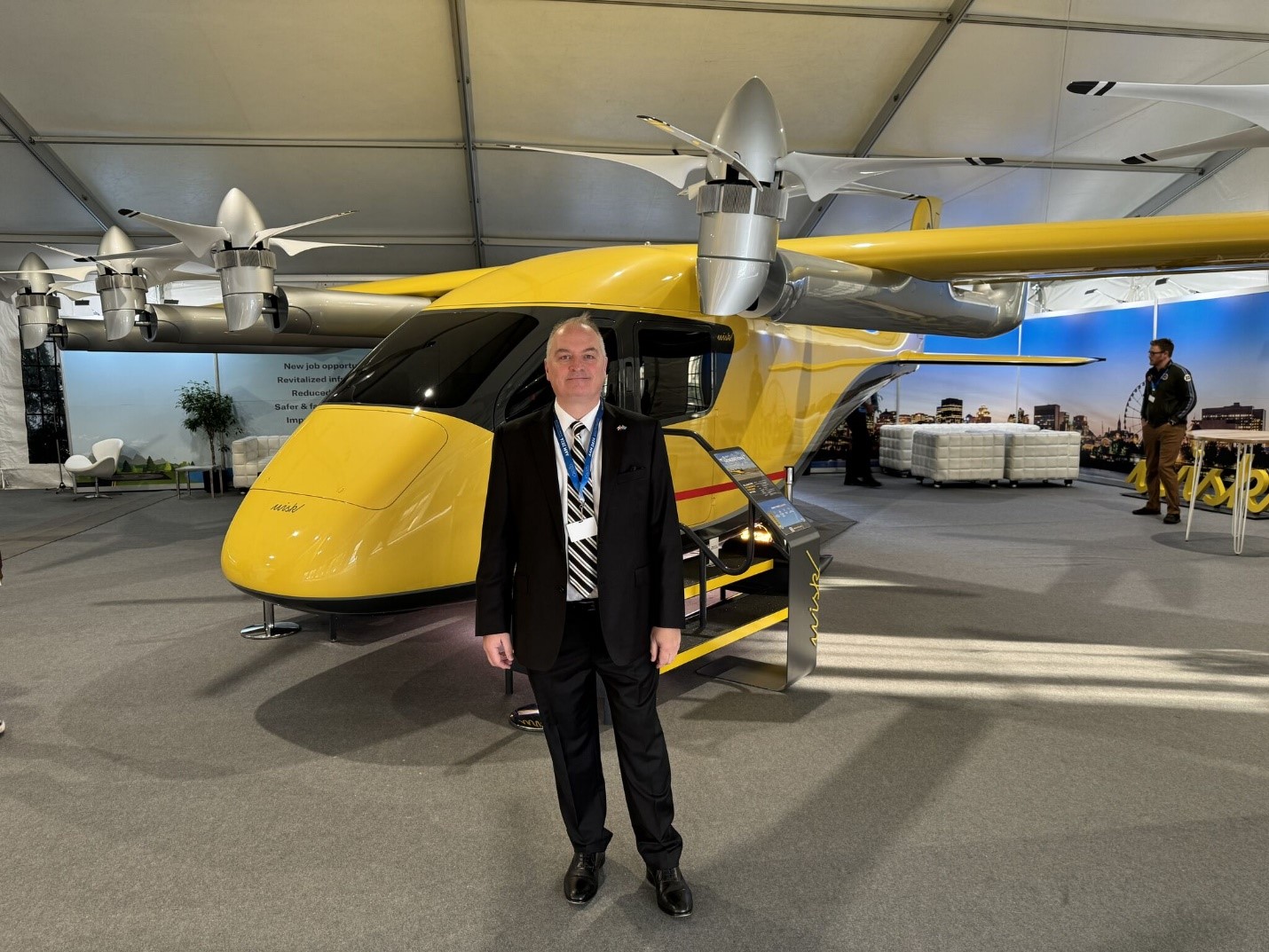
Pictured: Alan Chapman, Director of RPAS Traffic Management in front of Wisk’s eVTOL.
Through innovation, collaboration, and a commitment to safety, Canada is positioned to become a global leader in advanced aviation technologies.
The findings of this study not only highlight the scale of the opportunity, but also reinforce a broader vision: a future where drones and advanced air mobility enhance daily life, strengthen the economy, and keep Canadian skies among the safest in the world.
As RPAS and AAM reshape our skies, NAV CANADA is working with operators and innovators to safely integrate these technologies into Canadian airspace. Discover how we can support your drone and advanced air mobility initiatives by visiting NAV CANADA’s website for operational guidance, partnership opportunities, and resources to accelerate your path to the skies.
NAV CANADA provides the report and the information contained herein solely on an “as- is” basis without warranties, representations or conditions, either express or implied, of any kind, including but not limited to warranties concerning the completeness, reliability, or accuracy of the information it contains. Any action or inaction taken upon information contained in the report shall be at the recipient’s sole risk and expense, and neither NAV CANADA nor any third-party contributors to the report shall be responsible or liable for any losses or damages however caused in connection with the use of the report or such information, in whole or in part. The report may not be distributed or reproduced, in whole or in part, for third party distribution in any form without NAV CANADA’s express written permission. The report is based on information available at the time of publication and does not account for any future data or information.